
Are air ionizers safe for the environment? What should I avoid?
What is ozone?
Ozone is a molecule composed of three atoms of oxygen. Two atoms of oxygen form the basic oxygen molecule-- the oxygen we breathe that is essential to life. The third oxygen atom can detach from the ozone molecule, and re-attach to molecules of other substances, thereby altering their chemical composition. It is this ability to react with other substances that forms the basis of manufacturers’ claims for air purification.
What are positive and negatives of ozone?
The phrase "good up high - bad nearby" has been used by the EPA to distinguish between ozone in the upper and lower atmosphere. Ozone in the upper atmosphere, or "stratospheric ozone," helps filter out damaging ultraviolet radiation from the sun. Though ozone in the stratosphere is protective, ozone in the atmosphere (the air we breathe) can be harmful to the respiratory system. Harmful levels of ozone can be produced by the interaction of sunlight with certain chemicals emitted to the environment (such as automobile emissions and chemical emissions of industrial plants). These harmful concentrations of ozone in the atmosphere are often accompanied by high concentrations of other pollutants, including nitrogen dioxide, fine particles and hydrocarbons. Whether pure or mixed with other chemicals, ozone can be harmful to health.
What are air purifiers with ozone?
HEPA/Ionic air purifiers with built-in ozone generating devices use a filter, or electrostatic plates, as their primary means of filtration but utilize ozone to remove odors and freshen the air. There are consumer and commercial grade ozone generators that produce relatively high concentrations of ozone, but otherwise they are ineffective at removing airborne allergens like mold and pollen. While there is nothing “wrong” with ozone generators in controlled applications, they absolutely should not be sold for residential use. When used in the home, these types of air cleaners can be very hazardous to your health.1
What are safe levels of ozone exposure with air purifiers?
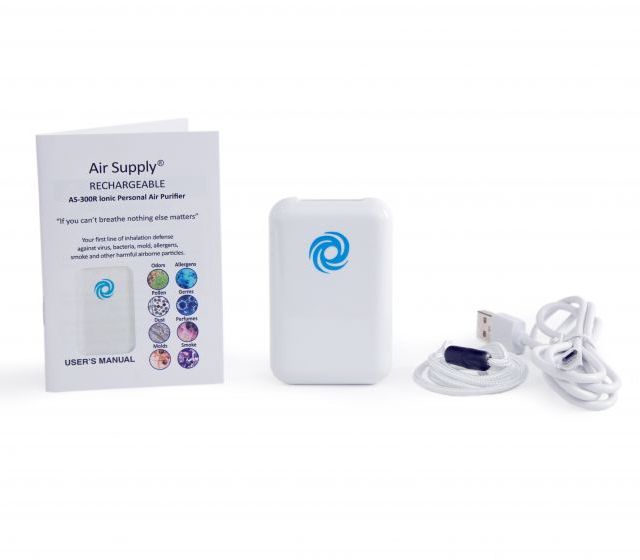
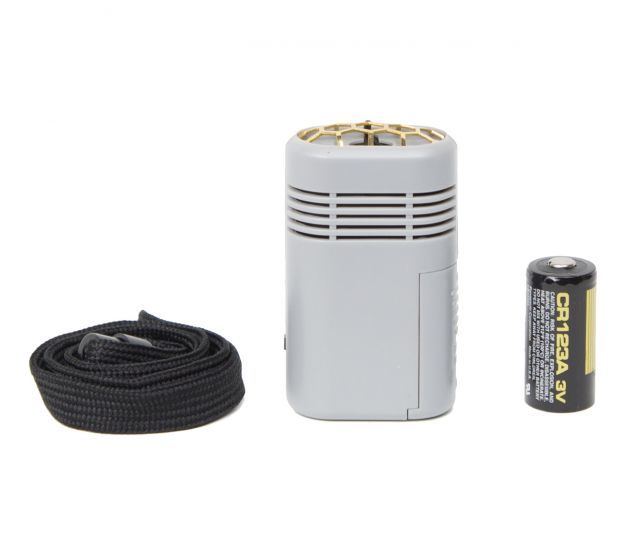
Wein Products, Inc. latest air purification system features ionic air purifiers that are filterless, virtually ozoneless and excel at cleaning the air of particles that comparable air filters may miss, such as smoke, fumes, bacteria, viruses and odors wherever you travel. What does virtually ozoneless mean? The Food and Drug Administration (FDA) requires ozone output of indoor medical devices to be no more than 0.05 ppm. Ozone output for the Minimate™ Ionic Air Purifier AS180i and Air Supply® Rechargeable Ionic Air Purifier AS-300R personal air purifiers are both less than .028 ppm, which is well under the standard. In addition, based on extensive scientific evidence about the effects of ozone on public health and welfare, in 2015 the Environmental Protection Agency strengthened the ground-level ozone standard to 0.070 ppm.
What are the differences between Wein Minimate and Air Supply?
Both the Minimate and Air Supply personal air purifiers are meant to be worn, are tested down to virus size range of .04 microns to defend against the coronavirus (Covid-19) and both are filterless, hence maintenance free. So what are the differences in the two wearable devices? First, the Minimate comes with a Lithium CR123A battery that lasts up to 40 hours. The Air Supply is rechargeable and comes with a USB cable for 28 hours of run time per charge. Both are designed to be portable, come with a neck cord and their measurements are similar, though the Minimate is more compact. The Air Supply weighs 2.12 oz. and the Minimate is 1.5 oz.